




2025 Surf Booties: The Guide to Winter Surfing Without Suffering
Updated October 2025
Winter in France. Water between 8°C and 14°C. Hollow waves. Empty lineup. Perfect sessions. Unless your feet are frozen after 20 minutes.
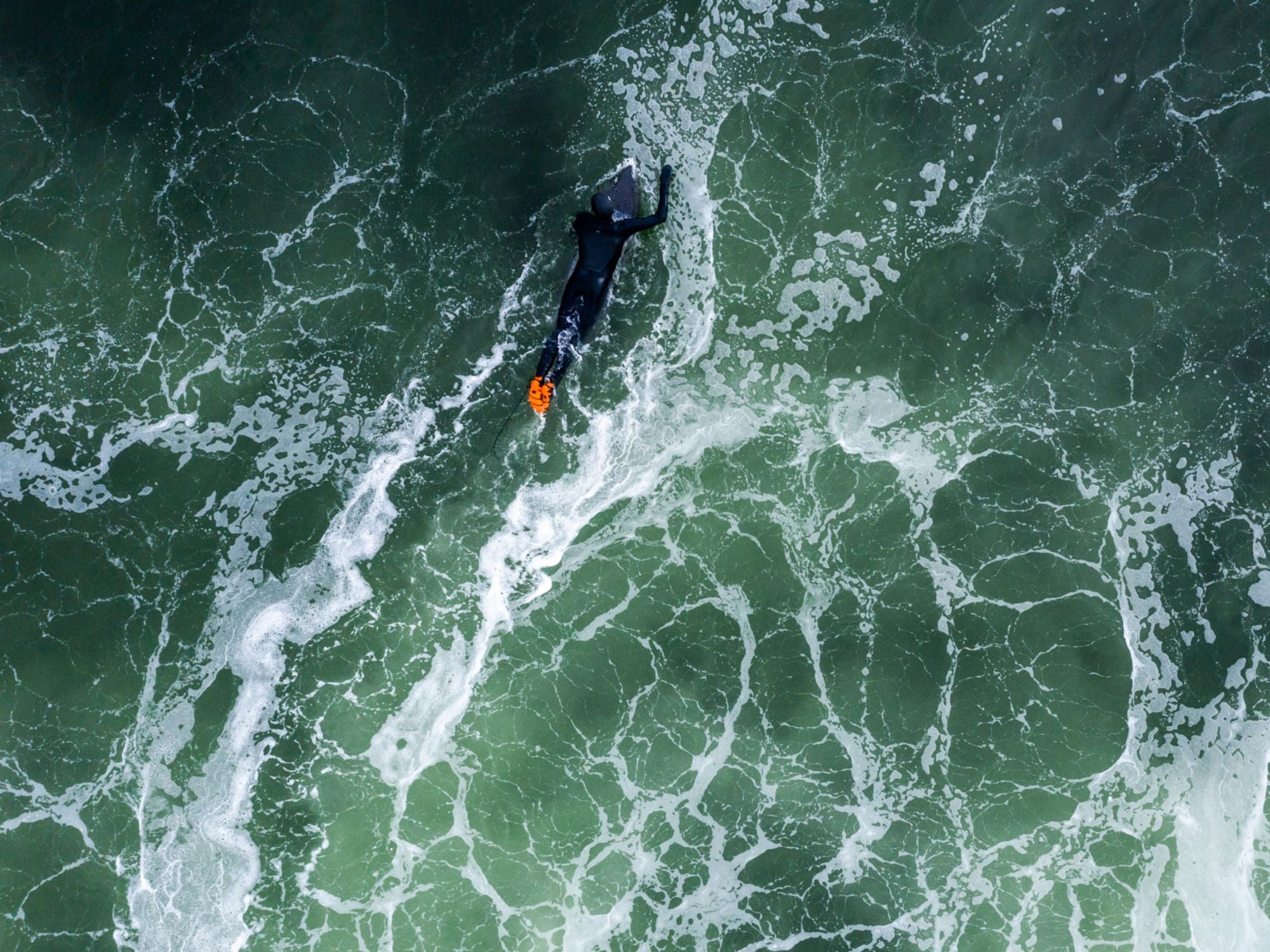
Surf booties aren't sexy. They don't look stylish in photos. But they make the difference between 45 minutes in the water and a 2-hour session. Between missing waves because you can't feel your toes and surfing normally.
This guide covers the real criteria for choosing your booties. No blabla about "feeling the ocean." Just what matters: thickness, fit, grip, durability. And we're going to talk about the problem no one dares tell brands about.
Thickness: based on your spot, not your ego
The rule is simple. The colder the water, the thicker neoprene you need. Here's what really works for France:
- 3mm: Water 12-15°C. Mild autumn, spring. Southwest September to November, April-May. Southern Brittany in summer.
- 5mm: Water 8-12°C. Classic winter. December to March throughout France. This is the standard for French winter.
- 7mm: Water <8°C. February in Northern Brittany. Cold snaps. Polar sessions. Most of you will never need them.
Our advice: If you're hesitating between 3mm and 5mm, go for 5mm. Better to be too warm than not warm enough. Frozen feet ruin a session. Slightly too warm feet, you won't care.
Board feel decreases with thickness, it's true. But you know what decreases board feel even more? Not being able to feel your feet.
Round toe vs Split toe: the match
Round toe: Comfortable. Your toes move freely. Problem: your foot slips inside the bootie. Especially on a shortboard. You lose precision. Less control over maneuvers. To be avoided unless you only surf mellow longboards.
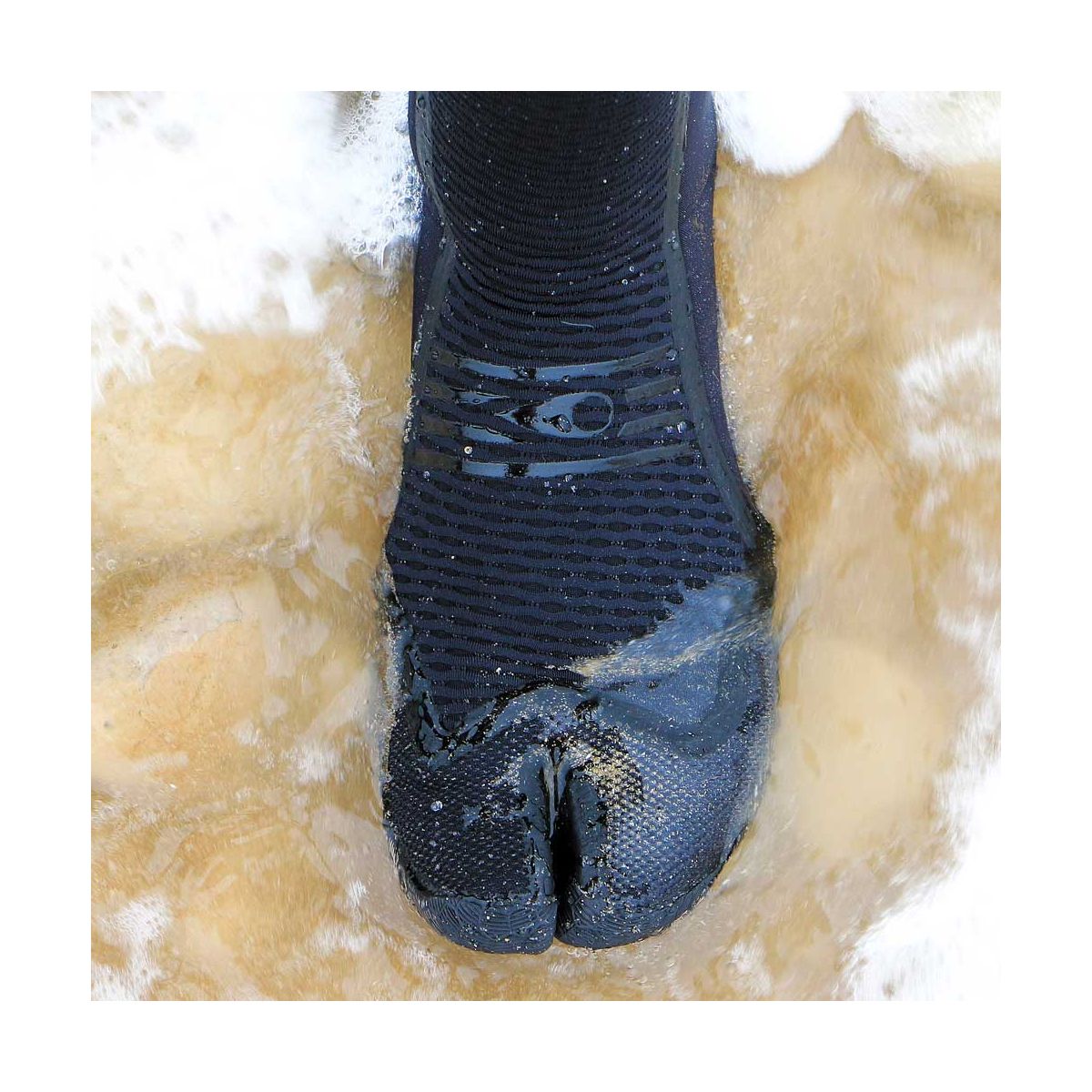
Split toe: Your foot doesn't move. Maximum control. Perfect grip. Classic problem: your leash gets caught between your toes. Unless you choose a connected split toe (the two toes are linked by a thin membrane).
Internal split toe: The best of both worlds. From the outside, it looks like a round toe. Inside, there's a separation for the big toe. Comfort + control. Zero risk of the leash getting caught.
Our opinion: Internal split toe > Connected split toe > Round toe. In that order. Round toes are for relaxing longboarding. For everything else, go for split toe.
Sock style vs Shoe style: a matter of preference
Two schools. Two philosophies. Neither is better than the other.
Sock style: Thin. Flexible. Adapts to the foot. Barefoot-like feel. Thin sole. Maximum board feel. Examples: Patagonia R3, Rip Curl Flashbomb. For those who want to forget they're wearing booties.
Shoe style: Structure. Thick sole. Protection. Strong grip. Examples: Xcel Drylock, Vans Surf Boot. For those who want solidity and grip, especially on rocks.
Choice:
- You surf sandy beach breaks → Sock style
- You have to walk on rocks to access the spot → Shoe style
- You're looking for maximum feel → Sock style
- You want durability → Shoe style
The problem no one dares to mention: sizing sucks
Here's the truth. Brands size based on city dwellers' feet who wear shoes all year. Narrow feet. Compressed toes. Fallen arches.
Surfers who live barefoot (or in flip-flops 10 months a year) have completely different feet:
- Wider: toes spread naturally
- Stronger arch: developed foot muscles
- Different shape: the foot has its natural, uncompressed shape
The result? You wear a size 43 in city shoes. You order a size 42.5 in booties (the rule is to go down half a size). It's tight on the sides. Your toes are compressed. It's uncomfortable.
Message to brands: Wake up. We don't wear closed-toe shoes 8 hours a day. Offer "barefoot" fits. Wider toe boxes. Cuts adapted to natural feet.
In the meantime, here's the solution:
- Wide/barefoot feet: Solite Custom Pro (high volume), O'Neill Psycho Tech (generous fit)
- Narrow feet: Patagonia R3 (low volume), Vans Surf Boot (narrow fit)
- Normal feet: Xcel Drylock, Rip Curl Flashbomb (medium width)
Always try before you buy. Sizes vary from brand to brand. A size 42 at Patagonia isn't a size 42 at O'Neill.
Brands worth considering in 2025
Tight budget (€60-80)
O'Neill Heat (€80): The best value for money on the market. GBS (glued blind-stitched) seams, ankle strap, solid construction. Available in 3mm, 5mm, 7mm. Not the most stylish, but it works. If you're starting out and don't want to spend €120, this is it.
Quiksilver Everyday Sessions (€65): Even cheaper. Connected split toe. Does the job. Weak point: flatlock seams (less waterproof than GBS). If you surf occasionally in winter, it's more than enough.
Mid-range (€85-100)
Vans Surf Boot 2 Hi (€85): #1 according to Inertia magazine after comprehensive tests. Vans applied its skate expertise to surf booties. Result: exceptional board feel, durability, perfect grip. Narrow fit (beware of wide feet). Split toe in 3mm, round toe in 5mm. If you're looking for performance, this is it.
Xcel Drylock (€95): The best-seller in surf shops. Thick fleece lining. Reinforced sole. Gusset collar to prevent water from entering. Shoe style rather than sock. Perfect for those who walk on rocks. Solid guarantee. Medium fit.
Rip Curl Flashbomb (€100): Flashbomb lining (dries ultra-fast). Sock style. Thin sole. Ankle strap. Internal split toe. For those who want maximum board feel. Caution: a bit slippery on wet rocks.
Premium / Eco-friendly (€100-130)
Patagonia R3 Yulex (€100): 85% natural rubber (Yulex) instead of classic petroleum-based neoprene. Fair trade certified. Low volume fit. Internal split toe. Z-strap. Arch support. For those who want to minimize their impact.
Sooruz (€100-120): French brand. Also uses Yulex on some models. Premium construction. Shapes designed for European feet.
Solite Custom Pro 2.0 (€105): Heat-moldable sole (25 minutes in hot water = custom bootie). High volume (perfect for wide feet). Three-point arch strap. Integrated heat booster socks. High price according to Stab Magazine 2024 wetsuit & boots category. A bit too bulky for narrow feet, but unbeatable for wide feet.
Mentions
Billabong, Hurley: Do the job. Nothing exceptional. Neither better nor worse than the competition. If you find them on sale, go for it. Otherwise, move on.
Yulex: neoprene that doesn't come from oil
Yulex is FSC-certified natural rubber. 85% hevea rubber instead of petroleum-based neoprene. Carbon footprint reduced by 80% according to Patagonia.
Patagonia and Sooruz use it on their high-end ranges. Identical performance to classic neoprene. Same warmth, same flex, same durability. Just less petroleum.
The only downside: the price. Expect to pay €20-30 more than an equivalent neoprene bootie. It's up to you to decide if it's worth it for your ecological conscience.
Maintenance: 3 simple rules
- Rinse with fresh water after each session. Salt and sand destroy neoprene.
- Dry in the shade, not in the sun. The sun cracks neoprene. Always in the shade or indoors.
- Store dry. Not in a damp car. Not in a closed bag. On a hanger or shelf in a well-ventilated area.
Invest in a good hanger like C-Monsta if you surf regularly. Your booties, gloves, and wetsuit will dry 3 times faster.
FAQ
What size should I get?
General rule: half a size down from your shoe size. Neoprene stretches over time. Better too tight at first than too loose after 10 sessions. Try them on in-store if possible.
3mm or 5mm for winter in Brittany?
5mm. Without hesitation. The water regularly drops below 10°C from December to March. Your feet will thank you.
My booties leak, is that normal?
A little water always gets in. If your feet stay warm, it's okay. If water circulates and you're cold, it's a fit problem (too big) or damaged seams. Check the seams, especially around the ankle.
Round toe or split toe for longboarding?
Round toe is sufficient. Longboarding requires less precision than shortboarding. Prioritize comfort.
My booties smell bad, what should I do?
Insufficient rinsing. Rinse with fresh water after EVERY session. Not drying fast enough. Use a hanger. If the smell persists, soak in water with white vinegar (1 part vinegar to 4 parts water) for 30 minutes, then rinse.
How long do booties last?
2-3 years with 50-100 sessions per year if well maintained. Seams give out before the neoprene. Regularly check tension areas (ankle, big toe).
Try before you buy
Feet are like boards. What works for your friend may not work for you. Always try before you buy when possible.
Are you in Brittany? Stop by our Zeus store in Perros-Guirec. We have Sooruz and Patagonia stock. You can try them on, compare, ask questions. We'll advise you based on your foot morphology, not on what we want to sell.
Winter in France means the best sessions of the year. Empty lineup, powerful waves, clear water. Don't spoil it with frozen feet. Get the right booties. Surf for 2 hours instead of 45 minutes.
This article is part of our series "Surfing Winter in France". Discover our other guides to enjoy the best sessions of the year.
Sources: Comparative tests conducted by The Inertia Magazine (2025).